What is email marketing? Honestly, when I first heard this term, I thought it just meant sending emails to people trying to sell them stuff. Spam, basically. I was wrong.
Email marketing is the practice of sending relevant, valuable emails to people who have actually signed up to hear from you — with the goal of building a relationship, sharing useful content, and yes, eventually making sales. The key word there is ‘signed up.’ These aren’t random people. They chose to hear from you. That’s what makes email marketing so powerful compared to most other marketing channels.
In 2026, email marketing still delivers one of the highest ROIs in digital marketing — roughly $36 returned for every $1 spent, according to multiple industry studies. Social media reach keeps shrinking as algorithms change. SEO takes months. But an email lands directly in someone’s inbox — someone who already knows your name and trusted you with their email address. That’s a privilege, and good email marketing treats it like one.
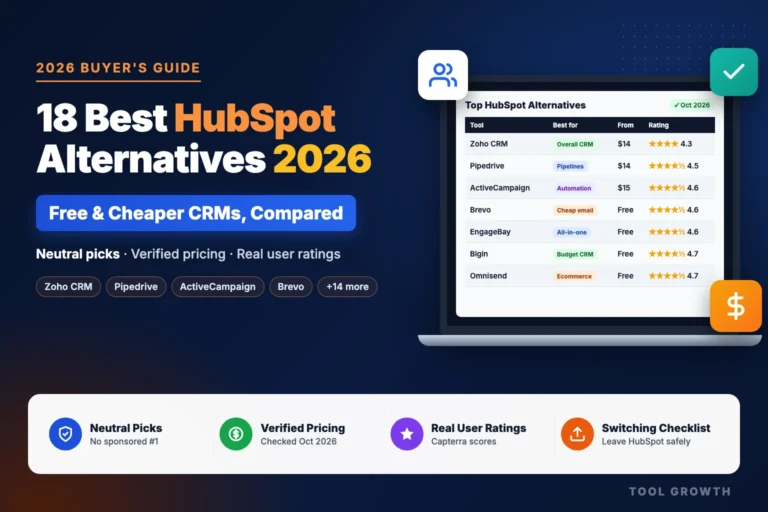
Ready to start? Check out our guide to the best email marketing tools for small businesses in 2026 — where we compare MailerLite, Brevo, HubSpot, and more with full pricing and honest reviews.
Why Does Email Marketing Actually Work in 2026?
People ask me this a lot — ‘Isn’t email dead? Doesn’t everyone ignore marketing emails?’ And I get it. We all have inboxes full of newsletters we never read. But here’s the thing: the emails that don’t work are the ones sent to the wrong people with the wrong message. Email marketing works when it’s relevant.
Think about it this way. When someone gives you their email address, they’re saying ‘I trust you enough to let you into my inbox.’ That’s different from a social media ad that pops up uninvited. The person made a conscious choice. So when you send them something genuinely useful — a tip, a discount, a guide, an update — they actually read it. That’s the foundation of what email marketing is
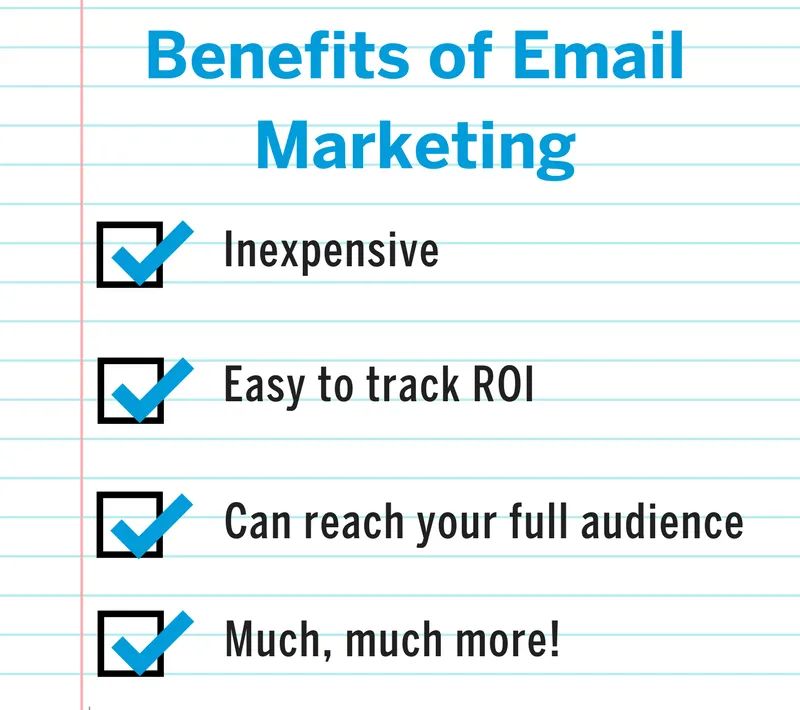
- You own your list — unlike social media followers, nobody can take it from you
- Direct access — no algorithm deciding who sees your message
- Highly personal — you can address people by name and send relevant content
- Measurable — you see exactly who opened, clicked, and bought
- Affordable — most tools are free until you hit thousands of subscribers
- Automated — set up once, runs on its own while you sleep
| Real stat: Email converts 40x more leads into customers than Facebook and Twitter combined (McKinsey). I know that sounds wild. But it makes sense when you think about it — email is intentional. Social media is scrolling. |
Types of Email Marketing — What is Each One For?
Not all marketing emails are the same. Here’s a quick breakdown of the main types — and what each one actually does:
| Email Type | What It Is | Example |
| Welcome Email | First email to new subscribers | ‘Hey! Thanks for joining — here’s what to expect’ |
| Newsletter | Regular updates, tips, or news | Weekly blog roundup or industry insights |
| Promotional | Sales, discounts, or offers | ‘20% off this weekend only — grab it here’ |
| Abandoned Cart | Reminder to complete a purchase | ‘You left something behind — still interested?’ |
| Re-engagement | Win back inactive subscribers | ‘We miss you — here’s something special’ |
| Drip Sequence | Series of automated emails over time | 5-part welcome series sent over 2 weeks |
How Does Email Marketing Work? — Step by Step
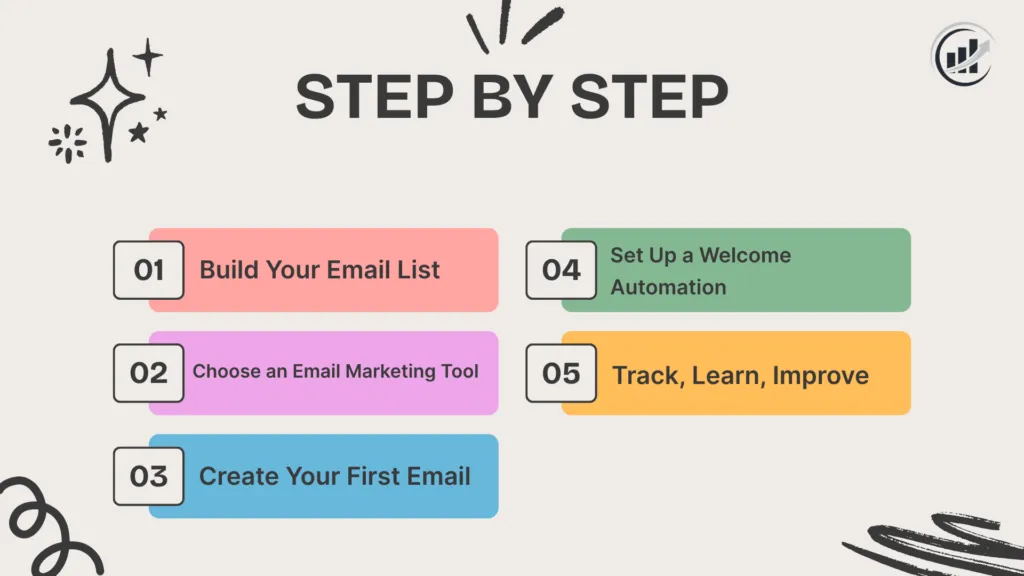
Step 1 — Build Your Email List
You can’t do email marketing without people to email. You grow your list by offering something valuable in exchange for someone’s email address — a free guide, a discount, a checklist, exclusive tips. This is called a ‘lead magnet.’ You place a signup form on your website, people fill it in, and they join your list.
Important: never buy email lists. I tried this once early on, and it was a disaster — low open rates, spam complaints, and deliverability issues that took months to recover from. Build your list organically. It’s slower but the results are incomparably better.
Step 2 — Choose an Email Marketing Tool
You need software to manage your list, design emails, and track results. You cannot do this from a regular Gmail account — it breaks email laws (like GDPR and CAN-SPAM) and Gmail will eventually block you for mass sends.
For beginners, I recommend starting with MailerLite (free up to 500 subscribers, automation included) or Brevo (free unlimited contacts, great free plan). Both are beginner-friendly and genuinely powerful enough to grow with you for a long time.
Not sure which free tool to start with? See our full comparison of the best free email marketing tools in 2026 — with honest pros, cons, and a clear recommendation for each type of business.
Step 3 — Create Your First Email
Your first email doesn’t need to be perfect. It needs to be genuine. Introduce yourself, tell people what to expect from your emails, and give them one useful thing right away — a tip, a resource, a welcome offer. Keep it short. Keep it human. Write like you’re talking to one person, not a crowd.
Subject line is everything. A great email with a boring subject line won’t get opened. Spend as much time on your subject line as you do on the email body. Ask a question, create curiosity, or make a specific promise — ‘How I saved 3 hours this week’ beats ‘Newsletter #4’ every single time.
Step 4 — Set Up a Welcome Automation
The most powerful thing a beginner can do is set up a simple automated welcome sequence — a series of 3-5 emails that automatically go to every new subscriber over their first 1-2 weeks. You write it once, and it runs forever without any extra effort on your part.
My welcome sequence for toolgrowth.com is 3 emails: Day 1 — welcome and what to expect. Day 3 — my most useful free resource. Day 7 — a genuine question asking what they’re struggling with. Simple. But it builds a relationship before I ever ask for anything.
Final Step — Track, Learn, Improve
Every email marketing tool shows you open rates, click rates, and unsubscribes. Pay attention to these numbers — they tell you what your audience actually cares about. A 20-25% open rate is healthy for most industries. Below 15% means your subject lines need work or your list needs cleaning. Above 35% means your audience loves what you’re sending — do more of it.
3 Email Marketing Mistakes Every Beginner Makes
Mistake 1 — Emailing Too Much or Too Little
I’ve been guilty of both. In my first month, I sent 4 emails in one week trying to be ‘consistent.’ My unsubscribe rate doubled overnight. Then I went quiet for 6 weeks and people forgot who I was. The sweet spot for most small businesses is 1-2 emails per week maximum, or even just 2-4 per month if your content is high quality. Consistency matters more than frequency.
Mistake 2 — Making Every Email a Sales Pitch
Nobody signs up to your email list to be sold to constantly. They signed up because they wanted value. The 80/20 rule works well here: 80% of your emails should give something genuinely useful — tips, insights, stories, resources. Only 20% should be promotional. When you earn trust first, selling becomes much easier and much less awkward.
Mistake 3 — Ignoring Mobile
Over 60% of emails are opened on mobile phones. If your email looks broken on a phone — tiny text, images that don’t scale, buttons too small to tap — people delete it immediately. Always preview your emails on mobile before sending. Every good email marketing tool has a mobile preview feature. Use it every single time
How to Get Started with Email Marketing — My Recommendation
If you’re reading this and thinking ‘okay, I need to start doing this’ — here’s exactly what I’d do if I was starting from zero today:
- Sign up for MailerLite free — takes 10 minutes, no credit card needed
- Create a simple signup form and add it to your website
- Write one welcome email — introduce yourself and give one useful tip
- Set up that welcome email as an automation so every new subscriber gets it
- Commit to sending one email every 2 weeks — just to start
- After 30 days, look at your open rates and adjust from there
| The most common reason people never start email marketing is because they feel like they need everything to be perfect first. You don’t. A simple list, a basic welcome email, and one monthly newsletter is already more than 90% of small businesses are doing. Start messy. Improve as you go. |
What is Email Marketing — Common Beginner Questions
My Final Thoughts
I started taking email marketing seriously about two years ago, after relying almost entirely on social media for traffic and leads. One algorithm change on Instagram cut my reach by 40% overnight. That was a wake-up call.
Email marketing gave me something social media never could — a direct, owned relationship with my audience. When I send an email, it reaches people. No algorithm in between. No reach cap. to ‘boost’ content I’d already created. Just a message, from me, to someone who actually wanted to hear from me.
If you’re a small business owner who hasn’t started building an email list yet — start today. Not next week. Today. Even if it’s just a simple MailerLite account with a basic signup form. The best time to build an email list was when you launched your business. The second best time is right now.
| Quick summary — What is email marketing:✅ Sending valuable emails to people who signed up to hear from you✅ Building relationships before making sales✅ The highest-ROI digital marketing channel in 2026✅ Completely free to start with MailerLite or Brevo✅ Works on automation — set up once, runs while you sleep |
Not sure whether to start with MailerLite or Mailchimp? Our MailerLite vs Mailchimp for beginners comparison breaks down exactly which tool is better for new email marketers — And See Which is Better for Beginners In 2026?
🔍 How We Tested This Tool
Every tool on Tool Growth is tested hands-on using real accounts — not marketing materials. We follow an 8-step review process before publishing.